
Just Drink the Sap!
a few trees can provide a delicious, nutritious spring tonic for drinking

Originally published: February 2017
Living in the Northeast, the change from winter to spring is often quite dramatic and enthusiastically welcomed by residents who are sometimes a bit weary after months of bundling up, scraping car windows, and shoveling sidewalks. While the signs of the seasonal change can come in many forms, perhaps there is no better pulse than the process of maple sugaring, which quite literally ebbs and flows based on the changing of temperate. Warm days above freezing coupled with colder nights below 32 degrees F mean the sap is flowing - and spring is coming.
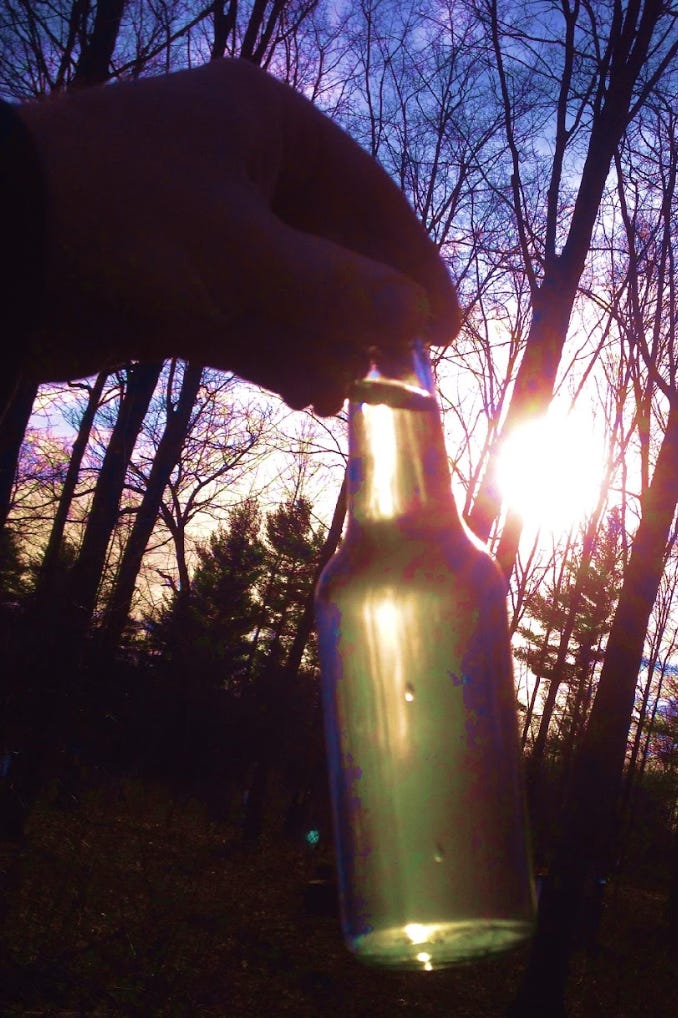
This way of welcoming change - the harvest of maple sap and boiling it into syrup - has long been a human tradition, from the Native People that tended these lands for thousands of years to the modern sugarmakers of today. While the tools and technology have changed significantly over time, the basic process is still the same. Tap trees, collect sap, boil, and store.
Today syrup is often seen as a luxury item fit only for drizzling over pancakes, for most of its history it was a staple, a necessity. During the time of the Revolutionary War, it was even radical. The ability of colonists to make their own sugar meant they could avoid purchasing cane sugar from the crown, a practice that was seen as a form of rebellion against the empire.
Most people are familiar with syrup, but raw water with a small amount of sugar (around 2%), known as sap, is actually what has been more widely consumed by humans over our collective history. Many cultures around the globe celebrate spring by consuming sap, which is not only delicious and energizing, but also loaded with minerals, nutrients, enzymes, antioxidants, phenolic compounds, and more.
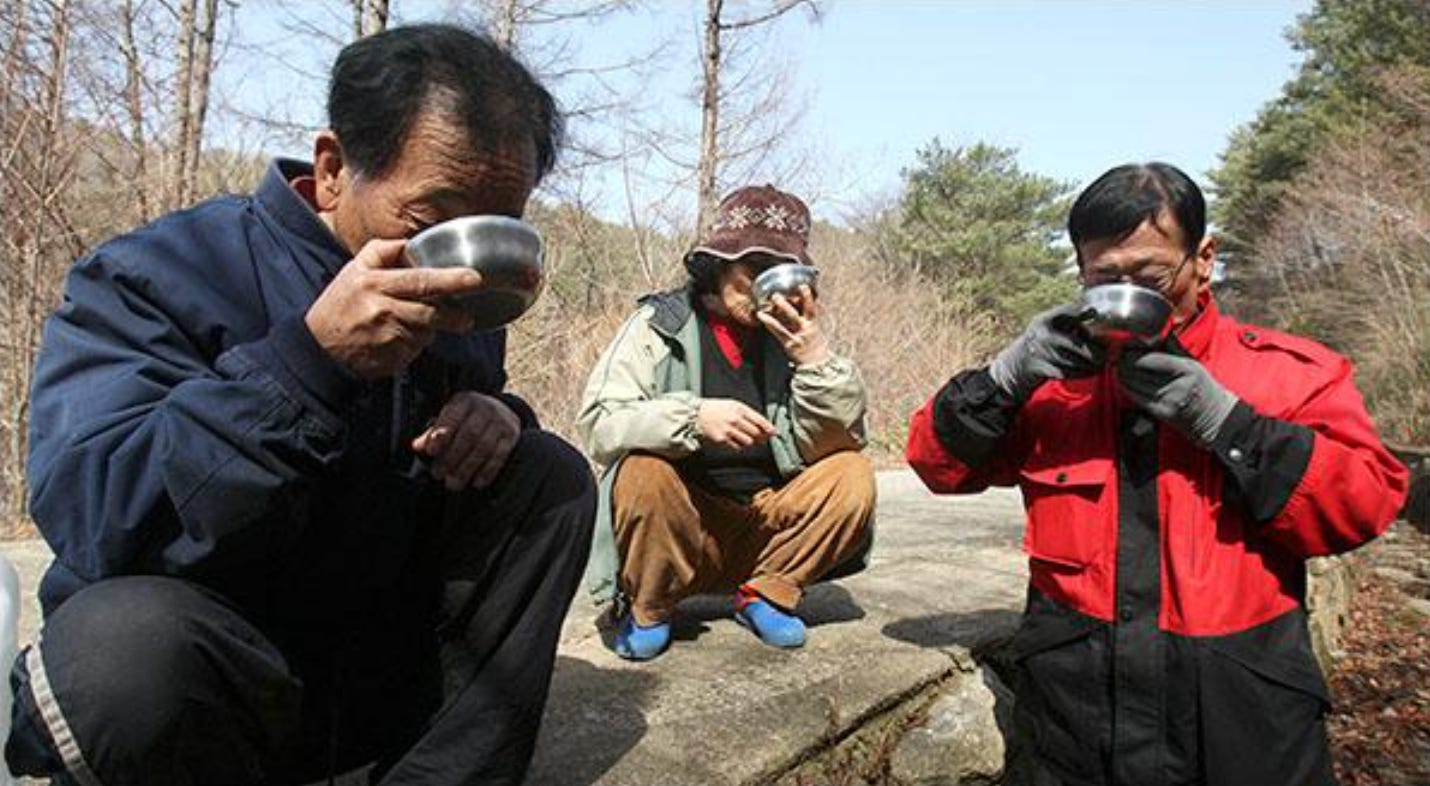
In Korea specifically, there is a long history of sap consumption and most comes from the Acer mono, a maple which is called gorosoe, meaning “the tree that is good for the bones” in Korean. This is likely due to the high mineral content in sap, most notably calcium, magnesium, and potassium. There are even places in Korea where people can take weekend retreats, visiting the mountains and consuming as much as 5 gallons of sap per day while sitting on heated floors with conditions similar to a sauna. The idea is to detox the bad stuff and unclog the body from a long winter. In Korean markets, maple sap usually sells for $5 – 10/gallon. (See this 2009 New York Times article on the topic, credit photo above)
Recently in North America, the so-called “functional beverage” industry has taken off, in part because consumers are becoming more aware of the health problems associated with sugary sodas and drinks, and are seeking alternatives. Just a few years ago, no one had heard of coconut water, but now it’s a mainstay at stores around the country. Maple water, which is minimally processed and packaged, is now beginning to show up on the shelves. The purity of the product, along with it being hyper-local and sustainable to produce, separates it from coconut and vitamin waters commonly available on the market today.
And, if you needed more reasons to try it, here are the top 5 reasons to drink maple water:
1. It’s the cleanest water you will ever drink. Maple water is filtered through the cellular tissue of a tree, which acts like a big biological filter.
2. It is loaded with vitamins and minerals. Several studies from Korea have cited the potential benefits of maple sap consumption in lab settings for treating osteoporosis, hypertension, and even curing hangovers. Most analysis has been done on the basic content of the maple sap, which has over 50 vitamins and minerals, and also a number of probiotics similar to those found in yogurts and other live dairy products.
3. It tastes amazing! The flavor is subtly sweet with hints of vanilla, almond, and caramel. Sap can be drunk straight, or used in cooking or to make tea or coffee.
4. It connects you to the winter-spring thaw. The season for sap flow is a short window between late January and into March. The sap content, taste, and volume varies each week, as winter changes to spring. The flow of sap is nature’s thermometer, telling a story of one of the most dynamic times of the year.
5. It supports sustainable forest farming and farmers. We have been tapping trees for over a decade and continually strive to use the latest technology and methods to ensure tree health, as well managed trees can be sustainably tapped for generations. Supporting farmers by purchasing local sap and syrup means you are helping keep farmers utilizing their woods, which means that forests are likely to be kept and not cut.
How to Tap
Tapping trees is a project that is relatively easy and inexpensive to get into. All one needs is a few sugar maple trees, a drill, a spout, and some sort of collection vessel.
On a good year, it can be expected that a tree 12” in diameter or more will produce somewhere in the range of 8 - 10 gallons of sap. At a ratio of 40 gallons of sap to one gallon of syrup, this means that 5 or 6 trees could theoretically yield about a gallon of syrup, per season. But in many cases the amount of time required to boil sap into syrup makes this process impractical for the homeowner, on a small scale. Thus many people do not tap trees, choosing instead to support a local sugar maker for their syrup.
Good Tapping is Key
Tapping correctly is the most important to take extra care and detail with, as tapping is essentially wounding the tree, and the goal is to create a “clean” wound that will heal quickly after the tap is removed. It is worth purchasing a special tapping drill bit from a maple supplier, as it will last forever and it is specially engineered to leave a cleaner hole, critical to helping the wound heal itself.
Tapping can be done anytime from early to late February (at least in Upstate NY) up through the end of the season in late March to even mid-April some years. The key is to avoid leaving taps in longer than six to eight weeks; otherwise the tree will naturally heal itself around the tap hole and the tap will be almost impossible to remove. Taps should be removed as soon as trees break bud, if not sooner.
To select a spot for tapping, first examine the entire tree. Is the crown complete, and does it appear healthy? Avoid tapping areas that appear diseased or damaged. If the tree has been tapped in previous years, tap 2” to the side and 4” up or down from any previous hole. No trees smaller than 10” should be tapped.
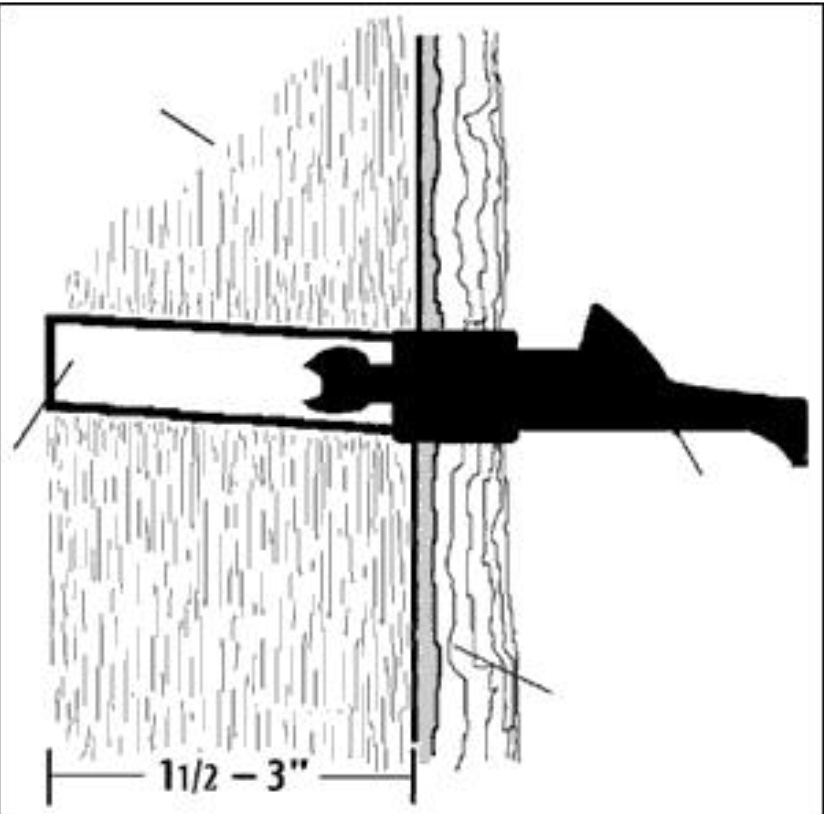
Drill with a high-speed cordless drill about 1.5” – 3” into the tree. Take extra attention to keep the drill straight in and out of the tree, to avoid an “oval” hole. The goal is to get through the sapwood and slightly into the hardwood center of the tree. Insert the tap and hammer lightly until the tap is snug in the hole. Hammering too hard will result in split wood, which takes longer to heal.
Keeping it fresh
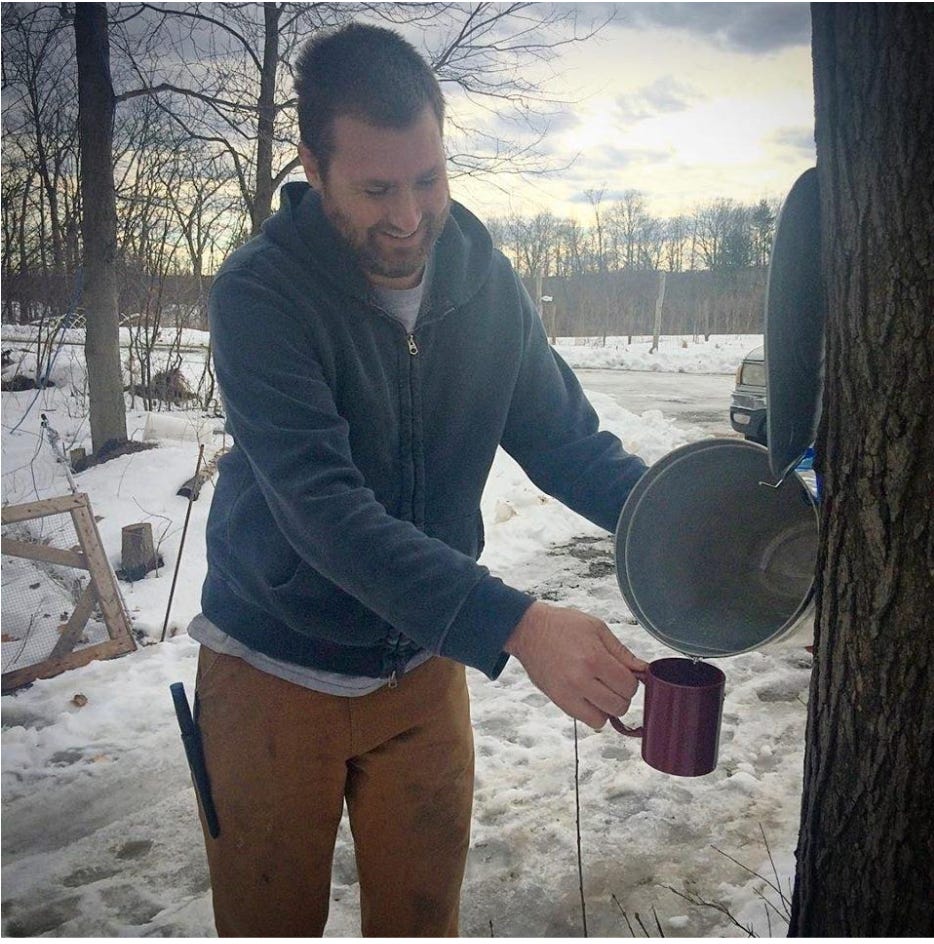
If you are interested in collecting and enjoying sap, it’s important to note that while sap is essentially sterile when inside the tree, it can quickly become contaminated as it exits. The choice of container for collection is thus very important. Maple buckets and jugs should be thoroughly cleaned before use. The cleanest option is to use a spring water jug and a stainless metal spout, to get the purest sap water possible.
The best sap runs during the beginning and middle of the season, but as the temperature warms toward the end of March and into April it’s best to stop drinking it straight. Sap can be stored in the fridge (or outside if below freezing) for several days and should generally be treated like milk; best consumed within one week of it coming from the tree.
Using Sap
Sap can be drank straight from the tree of course, but can also be used to make a wonderful carbonated beverage with a home soda-maker. Simply replace the water with sap, adding as much or as little carbonation as you’d like. It can also be utilized for cooking in soup, stews, and other recipes that call for water. It also makes a wonderful base for brewing beers and coffee beverages
The straight consumption of sap is an excellent option for people who want to tap some trees but aren’t interested in the time, labor, and fuel to boil it into syrup. It offers an opportunity to harvest the fruits of a long winter and connect to the cycles of the season. While the entire process of making syrup takes considerable energy, sap is just the opposite - it is really simple and takes very little time to tap, collect, and consume sap in a variety of ways.
The straight consumption of sap is an excellent option for people who want to tap some trees but aren’t interested in the time, labor, and fuel to boil it into syrup. It offers an opportunity to harvest the fruits of a long winter and connect to the cycles of the season. While the entire process of making syrup takes considerable energy, sap is just the opposite - it is really simple and takes very little time to tap, collect, and enjoy!
Loved reading this, the history and benefits. Will you be bringing sap drink to the winter market?